
When Waterjet Cutting Is the Right Choice
- Heat-sensitive materials: no discoloration, no warping, no change in material properties at the cut edge
- Versatility in Materials: a process suitable for metal, plastic, glass, Plexiglas, and stone—even when a project involves a mix of materials
- Save on post-processing: low-burr cuts that can often be processed immediately
- Pre-machining: Blanks cut close to the final contour reduce milling time and material usage
Technical Specifications
| Characteristic | Value |
|---|---|
| Scope of Work | 3,000 × 1,500 mm |
| Materials | Aluminum, steel, stainless steel, plastics, Plexiglas, glass, stone |
| Max. cutting thickness | Aluminum 60 mm · Steel/Stainless Steel 50 mm · Plastics/Plexiglass 100 mm · Glass 30 mm · Stone 70 mm |
| Data Formats | DXF, DWG (preferred for cutting layouts); STEP, IGES supported |
| Material Utilization | Nesting parts on the sheet—less scrap, lower costs |
| Tolerances | 0.1 mm |
From the cut-to-size piece to the finished component
With us, the waterjet cutting process doesn’t end at the cutting table: Cut parts are sent directly to CNC milling, to the welding shop, or—as a complete package—to assembly production —one order, one point of contact, one delivery date.
Related Services
Your Contact for Waterjet Cutting
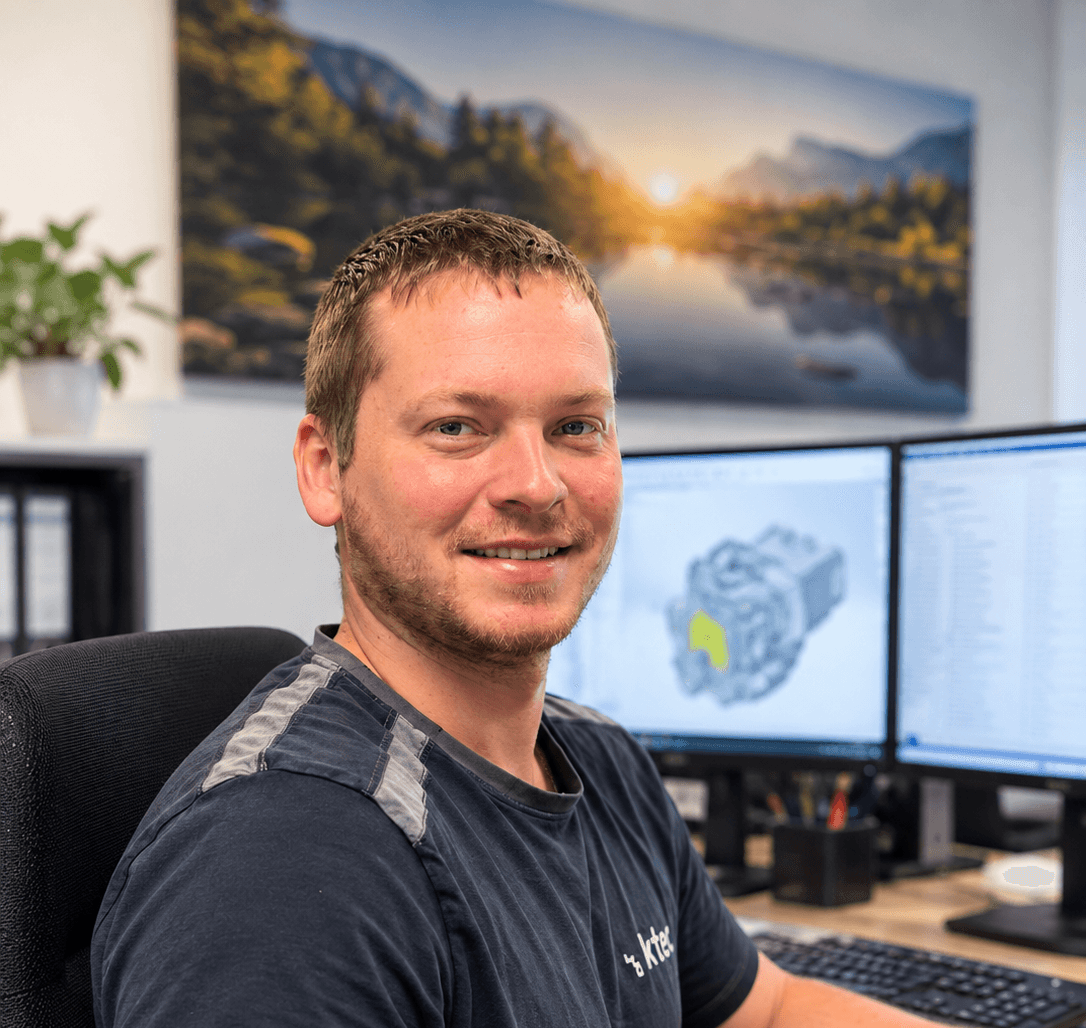 AI-edited
 Martin Prechtl
Frequently Asked Questions
Metals such as aluminum, steel, and stainless steel, as well as plastics, Plexiglas, glass, and stone—the process works with virtually any material.
Cold cutting: no heat input, no warping, no change in the microstructure at the edge. This is especially crucial when working with heat-sensitive materials, thicker cross-sections, and mixed materials.
The machine's working area is 3,000 × 1,500 mm; the maximum cutting thickness depends on the material.
Yes—we welcome DXF/DWG-based cutting-only orders. However, we also handle the entire manufacturing process, right up to a ready-to-install assembly.
The tolerance is less than 0.1 mm, which is precise enough for most contours and fits—and where tolerances are tighter, we combine the cutting process with mechanical finishing on our milling centers.